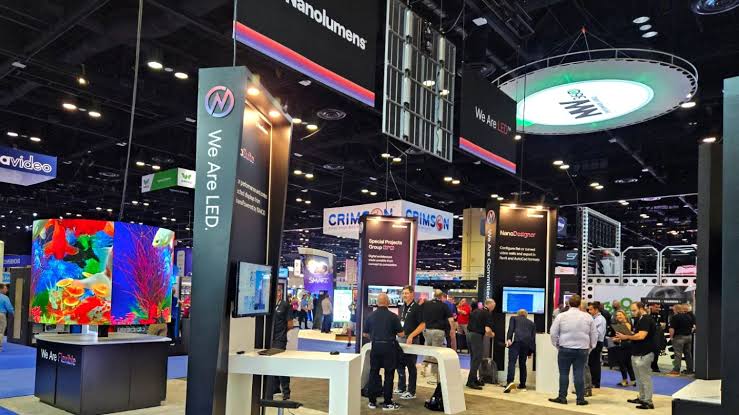
Trade show floors are brutally competitive in a way that most marketing environments are not — every exhibitor is physically present in the same space, competing for the attention of the same people walking the same aisles, and the window through which a passing visitor decides whether a stand is worth their time is genuinely uncomfortable to acknowledge once you understand how short it actually is. The decision forms before a word is spoken, before a brochure is picked up, before a product demonstration begins — it forms on the basis of what the stand communicates about the business at a glance from several metres away. An exhibition display stand designed with this reality at the front of the brief earns the attention that makes every subsequent element of the trade show strategy possible, and the absence of that design thinking is not recoverable through good salesmanship alone.
Physical Space Communicates What Digital Cannot
There is a dimension to in-person marketing that no digital channel replicates, and it lives entirely in the physical experience of encountering a brand in three-dimensional space with real materials, real lighting, and real spatial decisions that either invite or deflect. A stand built with quality materials and deliberate spatial design creates a physical impression that lingers differently from a digital touchpoint — people remember how a space felt, whether it drew them in or registered as generic, and whether the brand felt substantial or provisional from the moment they saw it. Businesses that understand this invest in the physical quality of their stand not as an aesthetic preference but as a commercial decision, because the quality of the physical impression directly shapes the quality of the conversations that follow.
Being Seen Before Being Approached
Long-distance visibility on a crowded exhibition floor is a different design problem from close-up engagement, and it is the one that most exhibitors underinvest in whilst spending heavily on the detail that only visitors who have already decided to stop will ever see. Stand height, large-format graphics at a scale that reads across a busy hall, and bold colour decisions that stand out rather than blend into the surrounding visual noise — these elements determine whether a business registers in a visitor’s peripheral vision from the other side of the floor or gets absorbed into the background. Exhibition display stands that solve the long-distance visibility problem first function as a navigation point on the floor, which means the visitors who arrive tend to be looking for something specific rather than simply passing by.
What the Stand Says Before Anyone Says Anything
Every design decision — materials, finish, typography, spatial organisation, lighting — communicates something about the brand before a single sales conversation begins, and the businesses that take this seriously use the physical environment deliberately to establish the tone that all subsequent interactions inherit. A stand that feels premium creates the expectation that the product is premium, and that expectation makes the sales conversation easier before it starts. A stand that feels underinvested creates a credibility gap that even strong salespeople struggle to close, because the first impression has already framed how the visitor is filtering everything they hear.
Modular Systems and Real-World Flexibility
The practical reality of exhibiting across multiple events in a year is that floor plans vary, stand size allocations differ, and the business itself evolves in ways that make a single fixed design increasingly misaligned over time. A modular exhibition display stand solves this not by compromising on any individual configuration but by making reconfiguration genuinely possible without starting from scratch — different layouts for different venue formats, updated graphics when messaging changes, and scaled-up or scaled-down versions of the same visual system depending on what each event requires. This flexibility has compounding practical value across a multi-event programme that a fixed custom build simply cannot match.
Layout Decisions That Drive Engagement
Open configurations that invite visitors to enter rather than presenting a counter that functions as a barrier, product placement that creates natural conversation-starting points, defined areas for demonstrations versus consultations versus casual browsing — these spatial decisions shape the quality of engagement that the stand produces across the event in ways that purely graphic-focused design thinking misses entirely. The businesses that think carefully about how people move through a stand rather than just what they see when they look at it from the aisle consistently generate more meaningful interactions, because the environment has been designed to make those interactions feel natural rather than transactional.
Conclusion
An exhibition display stand is the first and most persistent communication a business makes to every person who walks the floor, and the quality of that communication shapes every commercial conversation that follows throughout the event. Businesses that treat stand design as a strategic marketing decision rather than a logistical requirement consistently outperform those that approach it as an afterthought — in the quality of conversations had, the calibre of leads generated, and the commercial relationships that continue developing long after the exhibition itself has ended.