
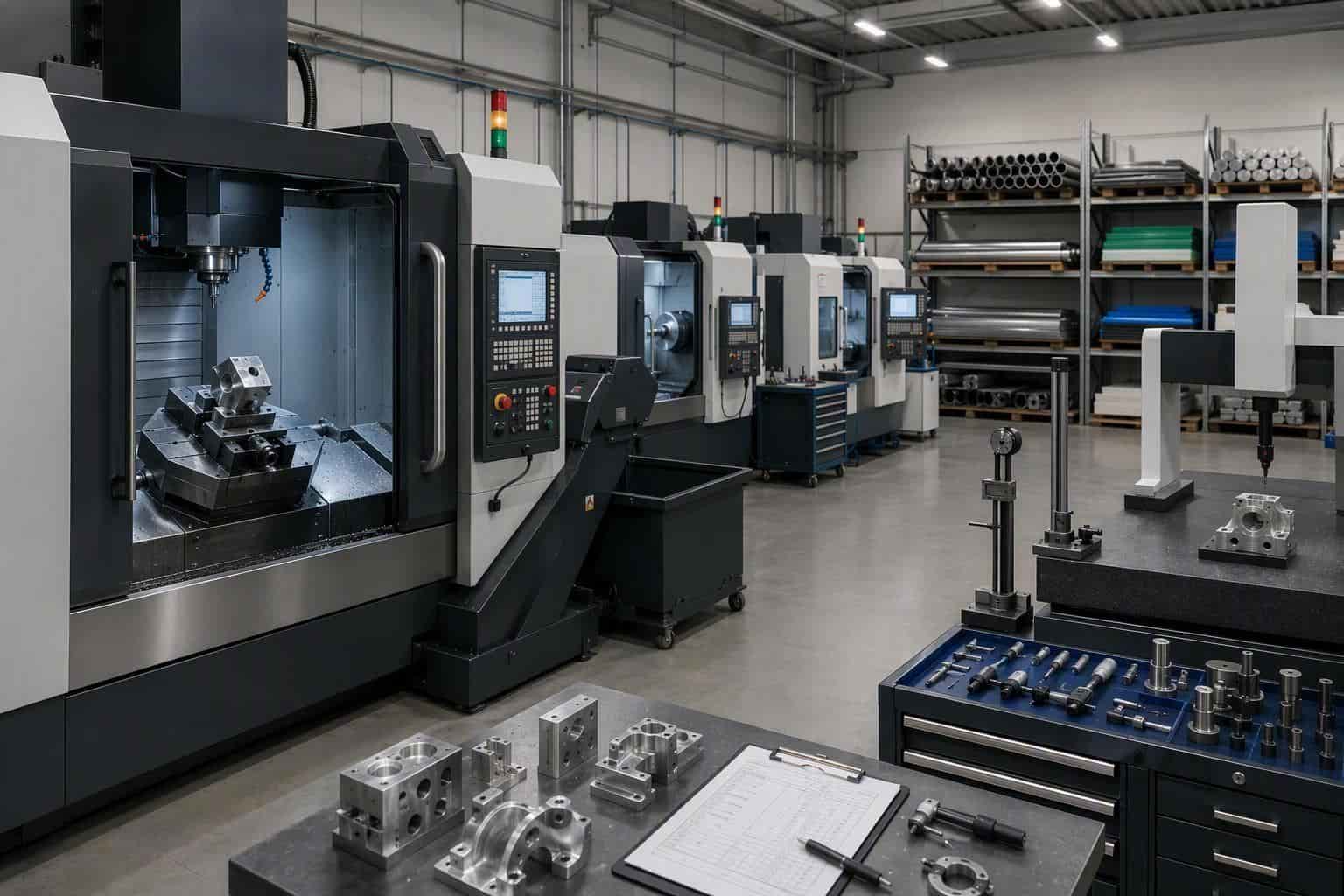
Whether you build medical devices, aerospace components or industrial equipment, the parts inside your product decide how well it performs. Tight tolerances, clean finishes and dependable delivery all start with one decision: the manufacturing partner you choose. Working with a reliable precision CNC machining supplier can shorten lead times, reduce scrap and keep your production line moving. But with so many machine shops competing for your business, how do you separate the truly capable from the merely available?
What Precision CNC Machining Really Means
CNC (computer numerical control) machining uses programmed cutting tools to shape metal and plastic into exact geometries. The word “precision” refers to the ability to hold very tight tolerances, often within ±0.01 mm, and to repeat that accuracy across hundreds or thousands of parts. That consistency is why CNC machining has become the backbone of industries where a fraction of a millimeter separates a part that fits from one that fails.
Key Factors to Evaluate Before You Place an Order
1. Equipment and Machining Capabilities
Start by reviewing the supplier’s machinery. A strong shop offers 3-axis, 4-axis and 5-axis milling, CNC turning and mill-turn centers. Multi-axis machines produce complex shapes in fewer setups, which improves accuracy and lowers your cost per part.
2. Material Expertise
Different projects demand different materials. Your supplier should work confidently with aluminum, stainless steel, titanium, brass, copper and engineering plastics such as PEEK, POM and nylon. Always ask for material certificates so you can trace every batch back to its source.
3. Quality Control Systems
Quality is where good suppliers stand apart. Look for ISO 9001 certification, coordinate measuring machine (CMM) inspection and first article inspection reports. A supplier who documents every measurement gives you confidence that the thousandth part will match the first.
4. Engineering Support and Communication
The best partners review your drawings before cutting any metal. Design for manufacturability (DFM) feedback can reveal small changes that reduce machining time, eliminate weak points or cut costs. Fast, clear communication also prevents expensive misunderstandings later.
5. Lead Times and Scalability
Your needs will change as your product grows. Choose a supplier who can deliver quick-turn prototypes today and scale to full production runs tomorrow without sacrificing quality or missing deadlines.
Why the Right Partner Saves You Money
It is tempting to choose the lowest quote, but the cheapest price rarely means the lowest total cost. Rejected parts, rework, shipping delays and field failures quickly erase any upfront savings. A dependable supplier delivers parts that are right the first time, protecting both your budget and your reputation with customers.
Final Thoughts
Choosing a CNC machining partner is a long-term investment in your product’s quality. Evaluate equipment, materials, inspection processes, engineering support and scalability before you commit. Request sample parts, ask detailed questions and visit the facility if possible. When you find a supplier that ticks every box, you gain more than a vendor; you gain a manufacturing partner that helps your business grow with confidence.