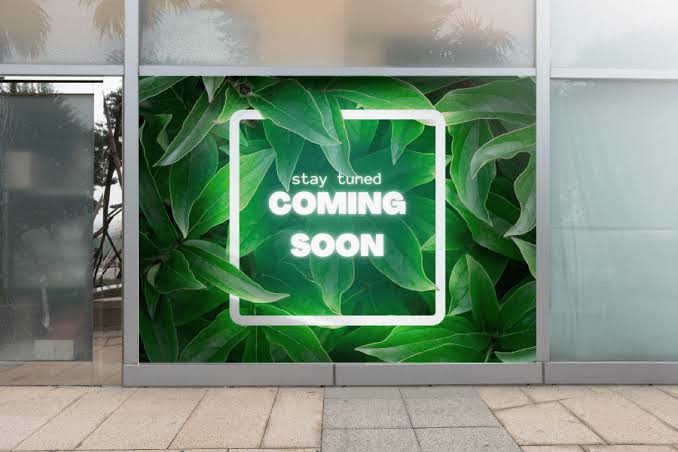
A storefront window can begin as one of the simplest parts of a commercial space.
It is glass.
It lets customers see inside, brings natural light into the building, and creates a visual connection between the business and the street.
But for retailers, restaurants, offices, salons, service businesses, showrooms, and other commercial locations, that same glass can also become some of the most valuable branding space on the property.
Window graphics can identify the business, introduce a campaign, create privacy, display products or services, carry large-format imagery, or completely change how a storefront looks from the street.
The finished installation may appear straightforward.
Getting there requires considerably more thought.
Measurements, viewing direction, glass configuration, artwork, coverage, materials, seams, doors, mullions, installation access, and the amount of visibility the business wants to preserve all affect the project.
Start With What the Window Needs to Accomplish
The first decision should not be whether to use a decal or a full wrap.
It should be what the business needs from the glass.
One retailer may want its windows to function almost like large advertising panels.
Another business may want to preserve most of the view into the store while adding logos and promotional graphics.
An office may need privacy across conference-room glass.
A restaurant could use portions of its windows for branding while keeping enough open space for customers to see inside.
A temporary tenant may need short-term graphics for an opening campaign or seasonal promotion.
The objectives can include:
- identifying the business;
- promoting products or services;
- creating storefront privacy;
- supporting a temporary campaign;
- announcing an opening;
- covering an empty or under-construction interior;
- reinforcing a brand;
- adding visual interest without changing the building.
Once the purpose is clear, the amount and type of coverage becomes much easier to determine.
Window Decals and Window Wraps Solve Different Problems
The terms window decals, window graphics, window lettering, and window wraps are often used loosely.
They all involve applying graphics to glass, but the scale and purpose can be different.
A window decal may consist of an individual logo, a group of letters, operating hours, a promotional message, or several contour-cut graphic elements.
Much of the original glass remains visible.
A window wrap generally uses a larger printed area.
It may cover a major section of the glass or extend across several window panels to create a continuous storefront graphic.
The distinction becomes important when planning the project.
Smaller decals may rely heavily on the existing storefront as part of the design.
Larger wraps allow the graphics themselves to dominate the appearance of the windows.
Both can work well.
They simply create different relationships between the business, the artwork, and the glass.
Full Coverage Is Not Always the Best Coverage
A large storefront does not necessarily need every square inch of glass covered.
There are times when full coverage is appropriate.
A business preparing for a grand opening might want to conceal construction inside.
A retailer may have a major seasonal campaign.
A vacant commercial space may need temporary graphics across several windows.
A brand may deliberately want the storefront to function as one continuous visual display.
In other situations, partial coverage works better.
Leaving portions of the glass open can:
- maintain visibility into the business;
- allow natural light inside;
- make the entrance easier to identify;
- create contrast around the graphics;
- prevent the storefront from feeling overly enclosed.
Coverage should therefore come from the communication goal rather than from an assumption that more vinyl automatically creates a stronger result.
The Storefront Needs to Be Measured as a System
Large window graphics depend heavily on accurate measurements.
A storefront may appear to contain several identical glass panels, but actual dimensions can vary.
Installers and designers may need to account for:
- individual panes;
- mullions;
- door frames;
- handles;
- locks;
- transoms;
- vents;
- window dividers;
- uneven spacing;
- existing decals;
- architectural trim.
A graphic that runs across several panes also needs to make visual sense when interrupted by those elements.
If a person’s face in a photograph falls directly behind a wide mullion, the finished result can look awkward.
The same applies to logos, headlines, product images, and important information.
Measurement is therefore not only about determining how much material is needed.
It helps determine how the artwork should be constructed.
Viewing Direction Changes the Design
Storefront graphics are normally created for people outside the business, but that does not mean every project should be approached the same way.
Pedestrian traffic may approach primarily from one direction.
Drivers may see the storefront from across the street.
Customers standing directly in front of the glass may encounter a completely different level of detail.
The design should account for these distances.
Large branding elements generally work better from farther away.
Service descriptions and promotional messages become readable as people get closer.
Operating hours and detailed information belong near the entrance where customers can stop to read them.
Trying to communicate every message at the same visual level usually creates clutter.
The Entrance Should Remain Obvious
One practical mistake in a large storefront graphic is allowing the entrance to disappear into the design.
When windows and glass doors are visually similar, a continuous wrap can make it less obvious where customers should enter.
The design may need to differentiate the door through:
- open glass;
- different graphic treatment;
- directional elements;
- door lettering;
- handles remaining visually clear;
- deliberate spacing around the entrance.
Good storefront graphics attract attention without making the building harder to use.
That distinction becomes particularly important in busy commercial areas where customers make quick decisions as they approach a business.
Artwork Needs to Be Designed Around the Architecture
A storefront is not one uninterrupted rectangle.
Glass panels are divided by frames.
Doors open and close.
Signage may already exist above the windows.
Awnings may obscure portions of the view.
Displays or shelving may sit directly behind the glass.
The artwork should respond to those conditions.
A continuous background may work across several panels even when frames interrupt it.
Important text usually needs more careful placement.
Logos should have enough clear space around them.
Photography may require cropping so major visual elements remain visible.
Designing directly from accurate storefront dimensions helps avoid compromises later during production.
Window Graphics Have to Work From the Street
Designing at storefront scale is different from designing a flyer or social-media image.
Graphics may be viewed while someone is:
- walking;
- driving;
- sitting in traffic;
- standing across the street;
- approaching the building at an angle.
That means visual hierarchy becomes important.
Someone should be able to understand the primary message quickly.
The business name may be the first priority.
A major promotion might take precedence during a campaign.
A strong product image can carry more impact than several small photographs.
Good storefront graphics do not necessarily contain less information.
They organize that information according to how quickly it needs to be understood.
Material Choice Depends on the Type of Coverage
Different storefront applications can require different vinyl materials.
A graphic covering a small portion of a window may have different requirements from a large printed installation spanning an entire facade.
Some projects use opaque printed vinyl to create strong color and coverage.
Others may use perforated window film when the business wants printed graphics facing outward while maintaining some visibility through the glass from inside.
Cut vinyl may work well for lettering, logos, hours, and simpler graphic elements.
Temporary campaigns can require materials chosen with eventual removal in mind.
Material selection may depend on:
- intended lifespan;
- indoor or outdoor placement;
- exposure to weather and sunlight;
- amount of coverage;
- desired visibility through the glass;
- graphic detail;
- removal expectations.
There is no single window film that is ideal for every storefront.
Printing a Large Storefront Requires Panel Planning
A wide storefront graphic is usually produced in multiple sections.
Large-format printing equipment has practical media-width limits, while storefronts can extend many feet across several windows.
The artwork therefore needs to be divided into panels.
The challenge is making those individual sections appear like one coordinated design after installation.
Panel planning should consider:
- glass dimensions;
- window frames;
- artwork transitions;
- seams;
- important text;
- image alignment.
Architectural divisions can sometimes help.
Instead of placing a seam through an important visual area, the project may use existing mullions or separate panes as natural breaks in the design.
The building itself can become part of the panel strategy.
Color Consistency Becomes More Noticeable Across Several Windows
A large storefront can contain a significant amount of printed surface.
Small inconsistencies that might be difficult to notice on an individual decal become more obvious when several adjacent panels are supposed to create one image.
Brand colors deserve particular attention.
If a company uses the same colors across its signs, website, interiors, printed materials, and other graphics, the storefront should feel like part of that same visual identity.
Production therefore needs consistency across every panel involved in the installation.
Existing Graphics Need to Be Considered
Not every project begins with clean, unused glass.
Businesses frequently replace old lettering, previous campaigns, faded graphics, or graphics left behind by an earlier tenant.
Existing vinyl may need to be removed before the new installation.
Adhesive residue may remain.
Glass may require additional cleaning.
The condition underneath old graphics may also differ from exposed areas.
That preparation needs to be considered before the new material is applied.
Installing fresh graphics over a poorly prepared surface can reduce the quality of an otherwise well-produced project.
Installation Starts With Clean Glass
Glass may look clean while still carrying contamination that interferes with vinyl adhesion.
Dust, oils, cleaning-product residue, fingerprints, and other material can affect installation.
The surface needs to be properly prepared before graphics are applied.
Installers also need to establish accurate starting positions.
On a multi-panel storefront, small alignment errors can compound as installation continues.
A headline running across several panes needs to remain level.
Patterns should connect correctly.
Large photographic elements need to line up.
Preparation and layout are therefore just as important as physically applying the vinyl.
Storefront Installation Has Real-World Obstacles
Commercial storefronts are active environments.
Customers may be entering and leaving the business.
Pedestrians pass directly beside the installation area.
Doors need to remain accessible.
Displays may sit immediately behind the glass.
Street parking, sidewalk conditions, property rules, and business hours can affect access.
Some installations may be easier to complete before opening, after closing, or during quieter periods.
Interior-installed graphics introduce another set of considerations because fixtures, merchandise, displays, or furniture may need to be moved away from the windows.
Planning around business operations helps prevent installation from becoming unnecessarily disruptive.
Large Window Graphics Can Support Temporary Campaigns
One advantage of vinyl graphics is that the storefront does not need to remain visually identical throughout the life of the business.
Retailers can change seasonal campaigns.
A restaurant can promote an opening.
A property can cover windows during renovation.
A new business can create anticipation before launch.
An event or pop-up location may need graphics for only a defined period.
These projects should be planned with removal in mind from the beginning.
Material choice, installation duration, and glass condition can all influence what happens when the campaign ends.
Temporary does not mean the planning should be temporary.
Storefront Graphics Should Work With the Main Sign
Window graphics are usually only one part of a commercial facade.
The business may already have:
- dimensional letters;
- an illuminated sign;
- a blade sign;
- an awning;
- door graphics;
- vinyl lettering;
- other storefront signage.
The window design should support those elements rather than compete with them.
If the primary sign already communicates the company name clearly, the windows may be better used for imagery, services, promotional messaging, or supporting branding.
If exterior sign space is limited, the windows may need to carry more identification.
Looking at the entire storefront as one visual system generally produces a stronger result than designing each sign or graphic independently.
The Best Storefront Graphics Respond to the Business Behind the Glass
A restaurant, law office, clothing retailer, medical practice, salon, supermarket, and construction company should not automatically receive the same approach simply because each has glass windows.
The business itself should influence the design.
Retail graphics might showcase products or seasonal campaigns.
Professional offices may prefer more restrained branding or privacy treatments.
Restaurants can use imagery, lettering, hours, and promotional elements.
Service businesses may prioritize identification and clear descriptions of what they offer.
Effective storefront graphics do not simply decorate glass.
They communicate something useful about the business occupying the space.
Experience Matters When Several Decisions Meet at Once
The easiest window project is a small decal applied to one clean piece of glass.
Commercial storefront projects can become much more involved.
There may be several panes.
The artwork may need to align across architectural breaks.
Doors and hardware need to remain functional.
The business may want both advertising and visibility through the glass.
Installation may need to happen around operating hours.
Old graphics may need to be removed first.
A company providing storefront graphics solutions needs to consider design, measurement, printing, material selection, surface preparation, and installation as connected parts of the same project.
The quality of the finished storefront depends on how well those decisions work together.
A Successful Installation Makes the Glass Feel Like Part of the Brand
When commercial window graphics are planned well, the finished result should feel intentional.
The customer does not think about where the print panels begin and end.
They do not notice how the artwork was adjusted around a door.
They do not think about the measurements, surface preparation, material selection, or installation sequence.
They simply see the business.
That is ultimately what the project is supposed to accomplish.
The glass was already part of the building.
The graphics turn it into part of the brand.