
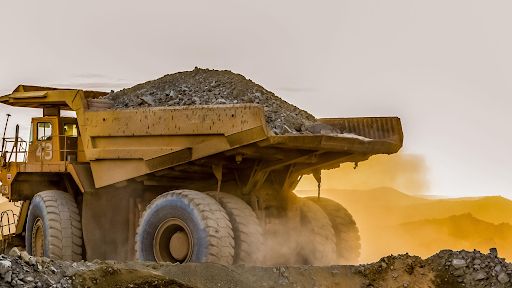
A gravel truck is a heavy-duty vehicle that transports and unloads loose construction materials such as sand, dirt, or, in some cases, crushed stone. They feature an open bed that holds a large volume of those heavy aggregates.
When it comes to unloading, they use hydraulic hoists to tilt the bed or shift materials out of the side. Some also use button-release gates. They’re an important part of construction and road work as they can transport large quantities of materials over rough terrain.
In today’s article, we’ll be talking about different types of trucks and how they differ from dump trucks. Let’s get started.
Common Types of Gravel Trucks
There are 4 major types of gravel trucks, based on how they handle and unload the material.
For example, a Straight Truck has a single axle or tandem-drive chassis. These trucks have an attached gravel box. We then have End Dump trucks that have a long trailing bed. They use a hydraulic lift to raise and empty materials from the rear.
Some trucks also have a Transfer Box configuration. Here, a secondary trailer box transfers its aggregate payload onto the main truck bed for dumping. Lastly, the Tandem/Tri-Axle trucks are used to distribute heavy loads and haul larger payloads on public roads.
Capacity and Measurement of Gravel Trucks
Now, these trucks also come in different sizes and can handle different materials. For example, payloads are usually restricted by the tons based on axle limits. The higher the axle limit, the more weight they can manage.
It’s also worth noting that different aggregate types affect the total load weight. For example, a cubic yard of standard gravel weighs roughly 1.25 to 1.4 tons, whereas a cubic yard of limestone can even exceed 1.5 tons. So before ordering this truck, it’s important to talk in detail with the contractor about the kind of load you want handled.
Difference Between a Gravel and Dump Truck
A dump truck is any truck with an open-box bed that tilts to empty its load, whereas a gravel truck is a specific type primarily used to haul gravel, sand, and other loose construction materials.
The unloading mechanisms also differ. Dump trucks rely heavily on a hydraulic lift system that raises the front of the bed to slide materials out of the rear tailgate. Gravel trucks, on the other hand, release materials through doors in the bottom of the trailer to spread gravel evenly across a road.
Things to Keep in Mind While Using These Trucks
These trucks are no doubt efficient, but operators must follow certain safety procedures to keep them running smoothly. These trucks are massive and have large blind spots. They need a significantly longer stopping distance to stop safely at the unloading site.
Similarly, unsecured or shifting aggregate can also cause loose stones to spill onto roadways. This could result in cracked windshields or loss of traction for nearby motorists.
A trained, highly experienced operator will address these problems appropriately.