Engineered Quartz Countertops are redefining modern surface design by combining durability, consistency, and aesthetic versatility in one material system. For homeowners, designers, and builders seeking a reliable surface solution, Engineered Quartz Countertops offer a balance of performance and style that natural stone alone often cannot match.
As demand grows for low-maintenance, high-performance interior materials, manufacturers like Hyundai L&C continue to refine quartz technology to meet evolving architectural and lifestyle needs. You can explore their product innovations at Hyundai L&C.
This guest post explores how Engineered Quartz Countertops are manufactured, their benefits, design applications, and what makes them a leading choice for kitchens, bathrooms, and commercial spaces in 2026 and beyond.
Understanding Engineered Quartz Countertops
Engineered Quartz Countertops are manufactured surfaces made from approximately 90–95% crushed natural quartz combined with resins, polymers, and pigments. This engineered composition allows for a highly controlled manufacturing process that delivers uniform color, pattern, and structural performance.
Unlike natural stone, which varies from slab to slab, Engineered Quartz Countertops provide predictable aesthetics and enhanced durability. This consistency is one of the key reasons architects and designers increasingly specify quartz for both residential and commercial projects.
Key Components of Engineered Quartz:
- Natural quartz crystals (for strength and hardness)
- Polymer resins (for binding and flexibility)
- Pigments (for color consistency and design variation)
This engineered structure creates a non-porous surface that resists stains, bacteria growth, and moisture absorption making it ideal for high-use environments.
Why Engineered Quartz Countertops Are in High Demand
The popularity of Engineered Quartz Countertops has surged due to changing consumer expectations. Modern buyers prioritize surfaces that require minimal maintenance while maintaining a premium appearance over time.
1. Consistent Aesthetic Appeal
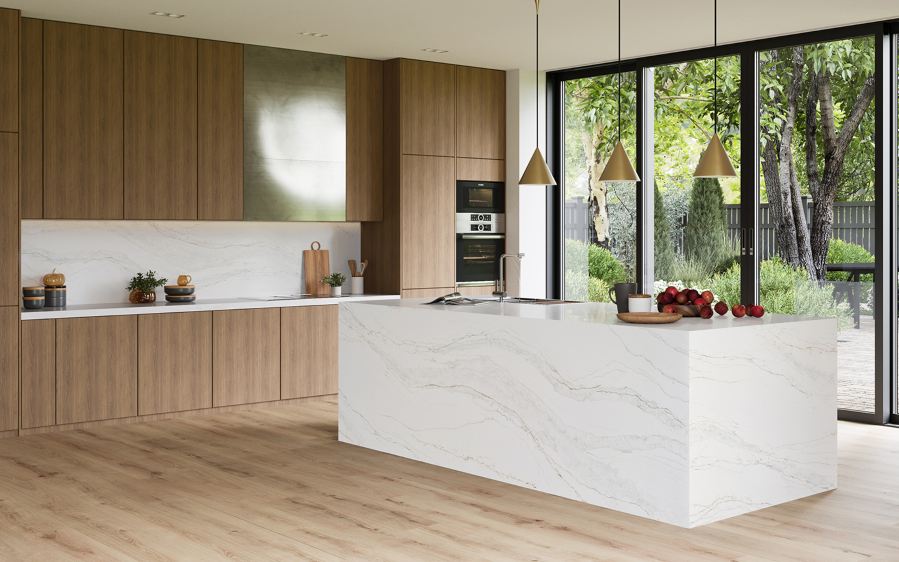
Quartz surfaces offer uniform patterns that suit modern minimalist designs. Whether the goal is a marble-inspired look or a solid contemporary finish, Engineered Quartz Countertops deliver reliable visual outcomes.
2. Superior Durability
Engineered quartz is highly resistant to scratches, chips, and everyday wear. This makes it particularly suitable for kitchens where surfaces are frequently used for cooking, cleaning, and food preparation.
3. Low Maintenance Requirements
Unlike granite or marble, quartz does not require sealing. Routine cleaning with mild soap and water is typically sufficient to maintain its appearance.
4. Hygienic Surface Performance
Because Engineered Quartz Countertops are non-porous, they resist bacteria and mold growth. This makes them a preferred option for health-conscious households and food preparation areas.
Manufacturing Process Behind Engineered Quartz Countertops
The production of Engineered Quartz Countertops is a highly controlled industrial process that ensures consistency and strength.
Step-by-Step Overview:
- Quartz Crushing and Sorting
Natural quartz is crushed into fine and coarse particles to achieve desired texture and strength. - Blending with Resins and Pigments
Quartz aggregates are combined with polymer resins and pigments to form a uniform mixture. - Molding and Compaction
The mixture is poured into molds and compacted under intense vibration and vacuum conditions to remove air pockets. - Curing Process
Slabs are heated and cured to harden the resin and solidify the structure. - Polishing and Finishing
The final slabs are polished to achieve the desired sheen, from matte to high gloss.
This precision-driven process ensures every slab of Engineered Quartz Countertops meets strict quality and performance standards.
Design Versatility in Engineered Quartz Countertops
One of the strongest advantages of Engineered Quartz Countertops is their design flexibility. Manufacturers can replicate natural stone patterns or create entirely unique visual aesthetics.
Popular Design Options Include:
- Marble-look quartz with soft veining
- Concrete-inspired industrial finishes
- Solid color contemporary surfaces
- Speckled or terrazzo-style designs
This versatility allows designers to align surfaces with various architectural styles, from modern minimalism to classic elegance.
Engineered Quartz Countertops in Kitchens
Kitchens remain the most common application for Engineered Quartz Countertops due to their durability and ease of maintenance.
Benefits in Kitchen Spaces:
- Resistant to food stains (coffee, wine, oils)
- Handles frequent cleaning without surface degradation
- Withstands daily meal preparation activities
- Maintains visual appeal under heavy use
In 2026 kitchen design trends, quartz continues to dominate open-concept layouts where countertops serve as both functional workspaces and visual focal points.
Engineered Quartz Countertops in Bathrooms
Bathrooms require materials that can withstand moisture, humidity, and frequent cleaning. Engineered Quartz Countertops perform exceptionally well in these environments.
Bathroom Advantages:
- Moisture-resistant and non-porous
- Prevents mold and mildew buildup
- Easy to clean with non-abrasive products
- Maintains color stability in humid conditions
Because of these characteristics, quartz is widely used for vanity tops, shower benches, and integrated sink designs.
Commercial Applications of Engineered Quartz Countertops
Beyond residential use, Engineered Quartz Countertops are widely adopted in commercial environments such as hotels, offices, healthcare facilities, and retail spaces.
Why Businesses Choose Quartz:
- Long-term durability under heavy traffic
- Minimal maintenance requirements reduce operational costs
- Professional, high-end appearance
- Hygienic properties suitable for public spaces
In healthcare and food service industries, the non-porous nature of quartz is especially valuable for maintaining sanitation standards.
Comparing Engineered Quartz to Other Materials
Understanding how Engineered Quartz Countertops compare to other materials helps clarify their value proposition.
Quartz vs. Granite
- Quartz: Non-porous, no sealing required
- Granite: Porous, requires periodic sealing
Quartz vs. Marble
- Quartz: Highly stain-resistant and durable
- Marble: Prone to etching and staining
Quartz vs. Solid Surface
- Quartz: Harder and more scratch-resistant
- Solid Surface: Easier to repair but less durable
These comparisons highlight why quartz has become a preferred choice for long-term surface investment.
Sustainability and Modern Manufacturing
Sustainability is becoming a key factor in material selection. Many manufacturers, including Hyundai L&C, are integrating environmentally responsible practices into production.
Sustainability Efforts in Quartz Production:
- Efficient use of natural quartz resources
- Reduced waste through precision manufacturing
- Longer product lifecycle reduces replacement frequency
- Improved energy efficiency in production facilities
These initiatives align with growing demand for environmentally conscious building materials.
Maintenance Tips for Engineered Quartz Countertops
Although Engineered Quartz Countertops are low maintenance, proper care ensures long-term performance.
Best Practices:
- Clean spills promptly using mild soap and water
- Avoid abrasive pads or harsh chemicals
- Use cutting boards to protect the surface
- Place hot cookware on trivets instead of directly on quartz
Following these simple steps helps preserve both appearance and structural integrity.
Future Trends in Engineered Quartz Countertops
The future of Engineered Quartz Countertops is being shaped by innovation in design, sustainability, and performance.
Emerging Trends:
- Ultra-realistic natural stone replication
- Antimicrobial surface enhancements
- Larger slab formats for seamless installations
- Eco-friendly resin technologies
- Expanded color customization options
As design expectations continue to evolve, quartz is expected to remain a dominant material in both residential and commercial architecture.
Final Thoughts
Engineered Quartz Countertops have established themselves as one of the most reliable and visually versatile surface materials available today. Their combination of durability, low maintenance, and design flexibility makes them suitable for a wide range of applications from residential kitchens to high-traffic commercial environments.
With continuous innovation from manufacturers like Hyundai L&C, quartz surfaces are expected to remain at the forefront of modern interior design. For those planning renovations or new construction projects, Engineered Quartz Countertops offer a long-term solution that balances practicality with refined aesthetics.
To explore product options and technical specifications, visit Hyundai L&C.