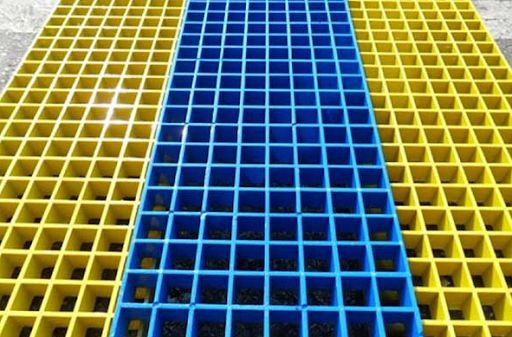
A walkway and flooring material made by joining fibreglass reinforced plastic strands with resin together, that is basically what people are searching for when GRP grating comes up in their query. From steel or aluminium grating, this stands apart in one major point, corrosion does not touch it, and this is the reason why, in industries where chemical exposure or constant moisture is common, this material gets picked more often than metal.
What Makes Up GRP Grating
Continuous glass fibre rovings sit inside a thermosetting resin, this is how the core structure works. The resin itself can be isophthalic polyester, vinyl ester, or in some cases phenolic, and which one gets used depends on the fire rating or chemical resistance level required for that project. To gain strength in the load bearing bars, fibres get arranged in specific directions, while for better underfoot grip, a grit layer usually sits on top.
For manufacturing, two methods are mainly followed:
- In moulded grating, resin and fibres get poured into a mesh shaped mould, and from this, a grid pattern forms with strength that stays fairly equal from different directions.
- Pultruded grating follows another process, where fibre bundles are pulled through a resin bath first, then through a heated die, and the result becomes straight bars, strong enough for longer spans or where heavier loads are expected.
Why This Gets Chosen Over Metal By Many Industries
Steel usually does not survive long in places with saltwater, acidic runoff, or high humidity, because oxidation slowly damages it over time. But with fibreglass grating, this rusting problem does not exist at all, so across the years, maintenance cost keeps going down.
Weight also becomes a deciding factor for many buyers. Compared to steel of the same size, this grating weighs close to one fourth only, which means the structure underneath carries less pressure, and installation gets simpler too, mainly on platforms or offshore rigs where crane access is not easy to arrange.
Then there is the electrical side of things. Current does not pass through this material, and because of that property, substations, chemical plants, and other places needing insulation for safety reasons often go with this option.
Where This Grating Gets Used Commonly
Across different settings, this grating shows up frequently, some examples being like this:
- In chemical processing plants, resin selection happens based on which acids or solvents are present at that site
- Water and wastewater treatment facilities, where moisture and chemical contact never really stops
- Offshore platforms along with marine structures, where saltwater corrosion resistance becomes a must-have quality
- Food and beverage processing areas, hygiene and washdown resistance matter the most here
- For pedestrians, walkways, stair treads, and mezzanine flooring inside commercial buildings also use it widely
How Load Capacity Gets Decided
Bar depth, spacing between bars, which resin is used, and fibre orientation, all these factors together decide the load rating. Span tables get published by manufacturers usually, showing safe working loads across panel thicknesses that range somewhere between 25mm and 50mm mostly. Heavier point loads get handled well when panels are thicker with bars spaced closer together, this is why vehicle or equipment traffic areas use such panels, whereas for zones with only foot traffic, thinner panels work just fine.
Resin type also brings changes in fire performance. Compared to standard polyester resin, phenolic resin formulations generally give better results for flame spread and smoke generation, and this explains why enclosed industrial buildings following strict fire codes choose it more often.
Common Questions People Ask
Does electricity pass through this grating?
No, naturally the material stays non-conductive, this happens because of how resin and glass fibre combine together. This is exactly why utility facilities and substations pick it over metal, most of the time.
For how many years does this grating usually last?
In environments where corrosion is a big concern, service life can cross 20 years without much trouble, since unlike steel, oxidation is not something that affects it. Though over many years, UV exposure might fade the surface a little bit, structural strength does not get affected by this at all.
On site, can cutting or drilling be done for this material?
Yes, this is possible, normal woodworking or metalworking tools with carbide blades manage to cut panels according to required size. But once cutting happens, raw fibre edges get exposed, so afterward, applying a resin sealant becomes necessary mostly.
When wet, does this become slippery?
On top, most panels already come with a grit coated surface, added mainly to improve grip during oily or wet conditions, and that is why washdown areas along with outdoor walkways prefer this option strongly.
Compared to steel grating, how does cost look?
Upfront, material cost usually stays higher than steel, this part is true. But looking at lifecycle cost over years, it tends to become lower actually, since repeated painting, galvanizing, or rust treatment is not something this material needs.
Final Overview
Taking everything into account, corrosion resistance, lighter weight, and electrical insulation properties together make GRP grating a strong alternative against metal flooring, especially in tough environments. From offshore platforms all the way to wastewater treatment plants, the way it resists chemical damage and moisture explains clearly enough why, toward this composite option, so many industries have been shifting for performance that stays reliable over the long term.